The Mint Mistakes That Created America’s Most Famous 20th-Century Overdate Coins
Mint errors fascinate collectors, but they also create confusion.
Each month, grading services and dealers hear from people who believe they found a valuable mint error. In many cases, the coin only shows damage. It may have scratches, dents, stains, or post-mint alteration. Yet true mint errors tell a very different story.
Most mint errors and misstruck coins are unique. Therefore, values can vary widely. A dramatic-looking error may not bring the price a new collector expects. For that reason, auction records offer the best guide. They show what serious collectors actually pay.
Overdate coins are different. They belong to one of the most popular error categories in U.S. numismatics. Better yet, several 20th-century overdates fit neatly into regular coin series. The Guide Book of United States Coins, better known as the Red Book, lists them in their proper series. In addition, many coin albums include spaces for them. As a result, demand remains strong in lower grades as well as Mint State.
These coins also carry a powerful backstory. They came from the era before modern die-making. A rushed Mint, worn equipment, and repeated hubbing created some of the most famous varieties in American coinage.

The 1918/7-D Buffalo Nickel: A Wartime Classic
The first great 20th-century overdate is the 1918/7-D Buffalo Nickel.
This variety came from the die-making process of the period. The Mint had to impress a working die more than once with a working hub. After each impression, Mint workers heated the die in a furnace. This annealing process softened the metal. Then the die could take another impression.
In this case, a die first received an impression from a 1917-dated hub. Then, either by mistake or by design, it received another impression from a 1918-dated hub. That second impression created the famous 1918 over 7 date. David Lange’s explanation of this process can be found in The Complete Guide to Buffalo Nickels.
The 1918/7-D Buffalo Nickel remains scarce. NGC has numerically graded a little more than 1,000 examples, according to the data cited in the original article. Most survivors show heavy circulation. Low-grade examples begin around $1,000.
High-grade coins tell a tougher story. Numismatists did not identify the variety until the early 1930s. By then, most pieces had already entered circulation. Choice and Gem examples remain extremely rare. NGC records only one MS66 example in its census data cited by Garrett.
Valuable Vintage Silver Rarities
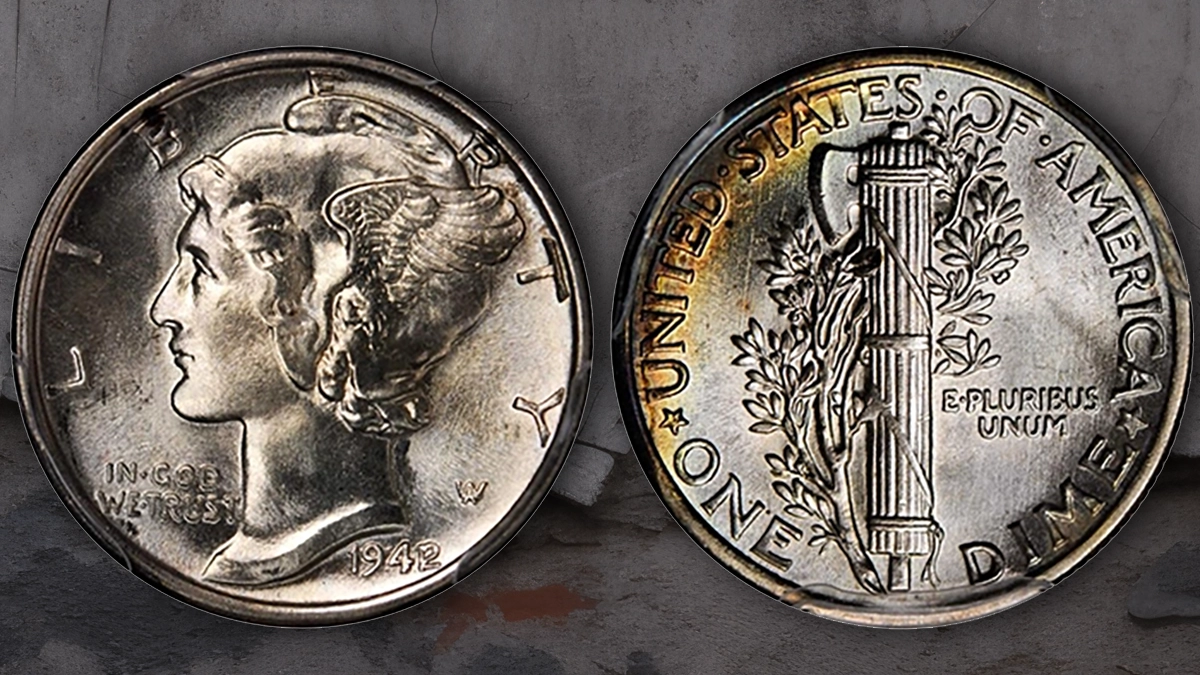
1942/1 and 1942/1-D Mercury Dimes
The next Red Book overdates are the 1942/1 and 1942/1-D Mercury Dimes.
These two coins rank among the most famous Mercury Dime varieties. They also show the overdate clearly. Even well-worn examples often reveal the underlying “1” beneath the final digit of the date.
NGC Census figures cited in the source show 2,288 numerically graded 1942/1 Mercury Dimes and 2,048 numerically graded 1942/1-D Mercury Dimes. That makes the two issues roughly equal in rarity.
These dimes still turn up in unexpected places. Coin shops that buy 90% silver across the counter sometimes cherry-pick them from bulk silver. Therefore, sellers should always check old silver dimes before selling them for melt value. One small date detail can change everything.
Condition drives the real excitement. NGC has graded only one 1942/1 Mercury Dime in MS66 and two in MS65, according to the cited census data. The Denver overdate appears slightly more available in Gem. NGC has graded three 1942/1-D examples at the MS67 level.
Full Bands examples bring even stronger premiums. Aside from the 1916-D Mercury Dime, the 1942/1 and 1942/1-D rank as the most expensive Mercury Dimes in circulated grades.
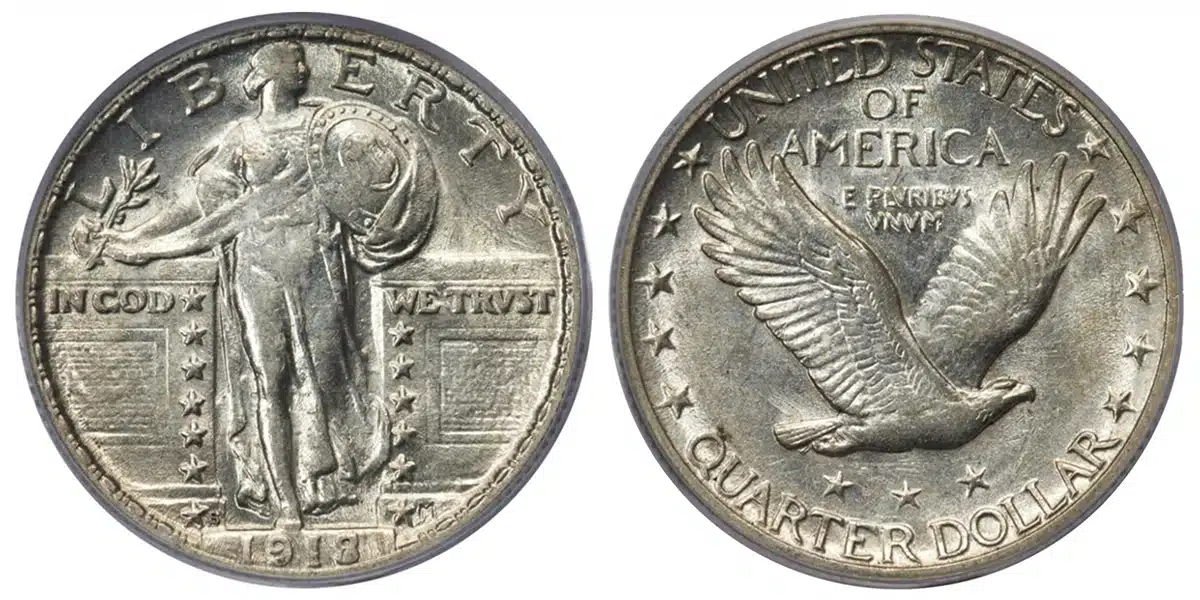
The 1918/7-S Standing Liberty Quarter
The 1918/7-S Standing Liberty Quarter may be the toughest silver overdate in this group.
Collectors did not discover the variety until nearly 20 years after issue. By then, the best chance to find one came from searching rolls of circulated quarters. Very few collectors saved Mint State examples at the time.
The issue also suffers from strike weakness. In fact, the 1918/7-S ranks among the weakest-struck Standing Liberty Quarters. Full Head examples almost never appear. Many coins also show heavy clash marks in Liberty’s gown.
NGC has numerically graded 350 examples without the Full Head designation, according to the source data. The service has designated only 20 examples as Full Head. Those numbers make the 1918/7-S Standing Liberty Quarter the rarest coin discussed so far.
Well-worn examples start around $1,500. Prices climb quickly with each grade. Gem coins almost never appear. PCGS CoinFacts lists a $108,000 auction record for a 1918/7-S Overdate in MS67, sold by Heritage Auctions on August 18, 2024. Coin World also reported that an NGC MS67 example brought $108,000 in Heritage’s Patton Collection offering.
Unlike the 1942/1 Mercury Dimes, this quarter almost never appears in bulk 90% silver. Buyers should also pay close attention to the visibility of the overdate. A clear overdate improves eye appeal and resale strength. A weak overdate can limit future demand.
Gold Coin Overdates of the 20th Century
The silver overdates above belong to heavily collected series. Thousands of collectors pursue Buffalo Nickels, Mercury Dimes, and Standing Liberty Quarters.
However, gold coins also produced important 20th-century overdates. These pieces remain scarce. Yet many collectors overlook them. As a result, they look underrated when compared with the famous silver keys.

The 1901/0-S Liberty Half Eagle
The 1901/0-S Liberty Head Half Eagle starts the gold portion of the story.
This overdate shows clearly. In fact, collectors can spot it with the naked eye. NGC has numerically graded about 500 examples of the overdate, according to the cited article. By comparison, NGC has graded 8,327 regular 1901-S Half Eagles.
That contrast matters. The 1901-S Half Eagle ranks among the most common dates in the Liberty Head Half Eagle series. Yet the 1901/0-S overdate remains much scarcer.
Collectors should check regular 1901-S Half Eagles carefully. Some overdates can slip through the grading process without the overdate attribution. That creates a real cherry-picking opportunity.
The market still treats this coin with surprising restraint. In grades below Mint State, the 1901/0-S often sells for only a little above melt value. Choice and Gem examples remain rare. NGC has graded only four at MS66, according to the cited census data.
For that reason, the 1901/0-S Half Eagle looks underpriced across many grades.

The 1909/8 Saint-Gaudens Double Eagle
The final Red Book overdate in this study is the 1909/8 Saint-Gaudens Double Eagle.
This coin delivers instant visual appeal. Because of the large format, the overdate stands out clearly. Collectors do not need much imagination to see it.
The 1909 and 1909/8 Double Eagles also form an interesting pair. Surprisingly, the overdate is the more common of the two. NGC has numerically graded 1,757 examples of the 1909/8 Double Eagle and 1,379 examples of the regular 1909 Double Eagle, according to the cited article. Gem examples of the regular 1909 are also rarer.
That gives the 1909/8 a unique distinction. It is the only 20th-century overdate in this group that appears more available than the normal date.
Even so, the coin remains a favorite among Saint-Gaudens Double Eagle specialists. The overdate is bold. The design is legendary. Also, examples below Choice condition often trade close to melt value. That combination gives the issue broad appeal.
Building a Six-Coin Overdate Mini-Collection
Collectors who want a focused challenge can build a six-coin overdate set from these classic issues:
- 1918/7-D Buffalo Nickel
- 1942/1 Mercury Dime
- 1942/1-D Mercury Dime
- 1918/7-S Standing Liberty Quarter
- 1901/0-S Liberty Head Half Eagle
- 1909/8 Saint-Gaudens Double Eagle
This group offers history, scarcity, and variety. It also spans copper-nickel, silver, and gold coinage.
The 1918/7-D Buffalo Nickel and 1918/7-S Standing Liberty Quarter have long ranked among the 100 Greatest U.S. Coins. Both coins carry major collector demand. Both also tell a story rooted in early 20th-century Mint production.
Meanwhile, the two gold overdates deserve more attention. They remain scarce. They show clear date features. Yet many examples still trade near bullion-related levels in lower grades.
As always, collectors should buy the best coin they can afford. They should also choose coins with clear overdates, strong eye appeal, and problem-free surfaces. These details matter now. They will matter even more when it comes time to sell.
The post Classic Mint Errors Collectors Still Chase the U.S. Overdate Coins of the 20th Century appeared first on CoinWeek: Rare Coin, Currency, and Bullion News for Collectors.
from CoinWeek: Rare Coin, Currency, and Bullion News for Collectors https://ift.tt/31oSPME


