Coins are more than metal, they’re artifacts of the nation’s history. Each design reveals something about America’s identity, values, economic challenges, and changing societal tastes. Some coins commemorate pivotal moments. Others symbolize national unity during difficult times. Together, they form a historical record you can hold in your hand.
This list highlights the Top 10 U.S. coins that tell the story of America, spanning from the birth of the nation to the modern era. Each coin reflects a critical chapter in the country’s development.
Let’s begin.
10. 1787 Fugio Cent
The nation’s first coin was authorized by the Continental Congress
The 1787 Fugio Cent holds a unique place in American numismatics as the first coin issued under the authority of the United States.
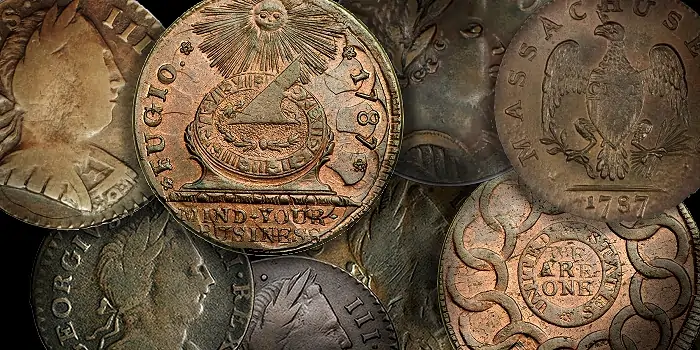
Designed with input attributed to Benjamin Franklin, the copper cent features a sundial with the motto “Fugio” and the warning “Mind Your Business,” reflecting Enlightenment values of industry and personal responsibility.
The reverse displays thirteen linked rings symbolizing unity among the original states. Authorized by the Continental Congress, the Fugio Cent circulated briefly but left a lasting legacy.
Today, it is prized by collectors for its historical importance, design, and connection to the nation’s earliest monetary experiments.
Why it tells America’s story
- Reflects early American independence
- Demonstrates Franklin’s belief in personal industry
- Marks the beginning of federal coinage
Historical context
Issued amid efforts to stabilize the young nation’s currency, the Fugio cent symbolizes America’s earliest attempt at unified monetary policy.
Collector takeaway
Holding a Fugio feels like holding the nation’s first financial footsteps.
9. 1794 Flowing Hair Dollar
America’s first silver dollar, and a symbol of national pride.
The 1794 Flowing Hair Dollar is widely regarded as the first silver dollar struck by the United States Mint.
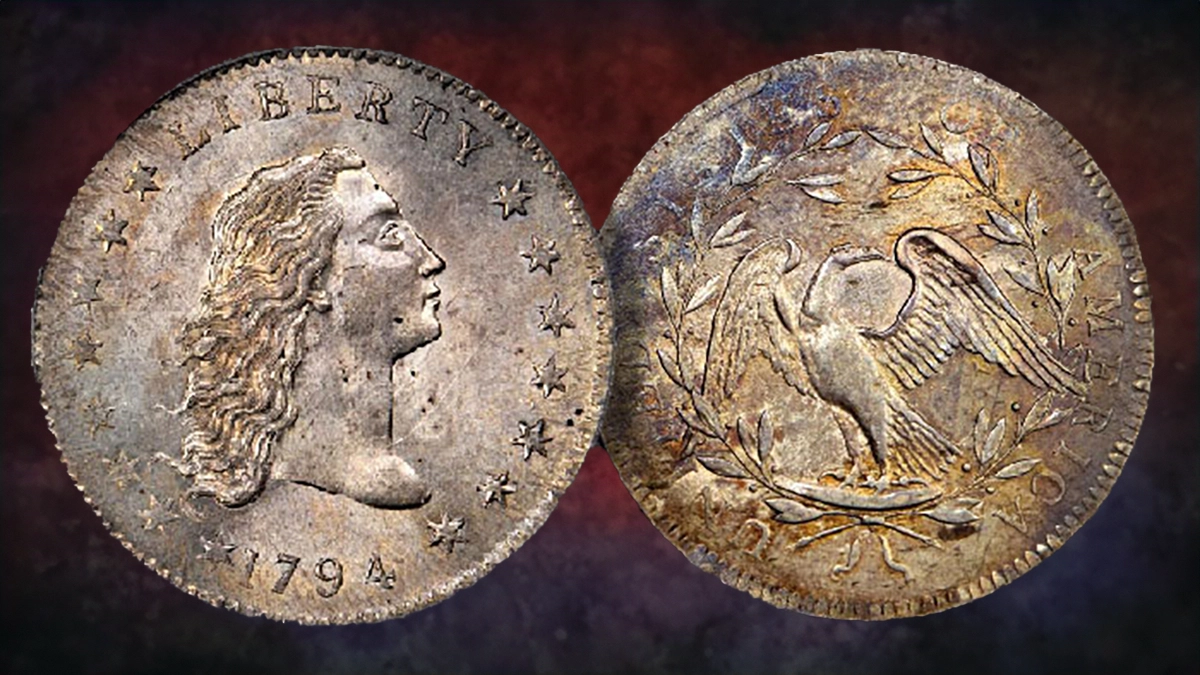
Designed by Robert Scot, the coin features Liberty with flowing hair on the obverse and a small eagle on the reverse, reflecting early American neoclassical ideals.
Struck shortly after passage of the Coinage Act of 1792, the issue symbolizes the young nation’s assertion of economic independence. Survivors are rare, with many showing weak strikes or adjustment marks typical of early Mint production.
Highly prized today, the 1794 Flowing Hair Dollar stands as one of the most important coins in American numismatics.
Why it tells America’s story
- Signified economic independence
- Demonstrated early Mint craftsmanship
- Showed America’s ambition to join global commerce
Historical context
The young republic needed credible silver coinage to participate in international trade. This coin answered that call.
Collector takeaway
The 1794 dollar stands as one of the most historically important coins ever struck by the United States.
8. 1804 Draped Bust Dollar
The King of American Coins and a symbol of diplomatic outreach
The 1804 Draped Bust Dollar is among the most famous rarities in American numismatics, often called the “King of American Coins.”
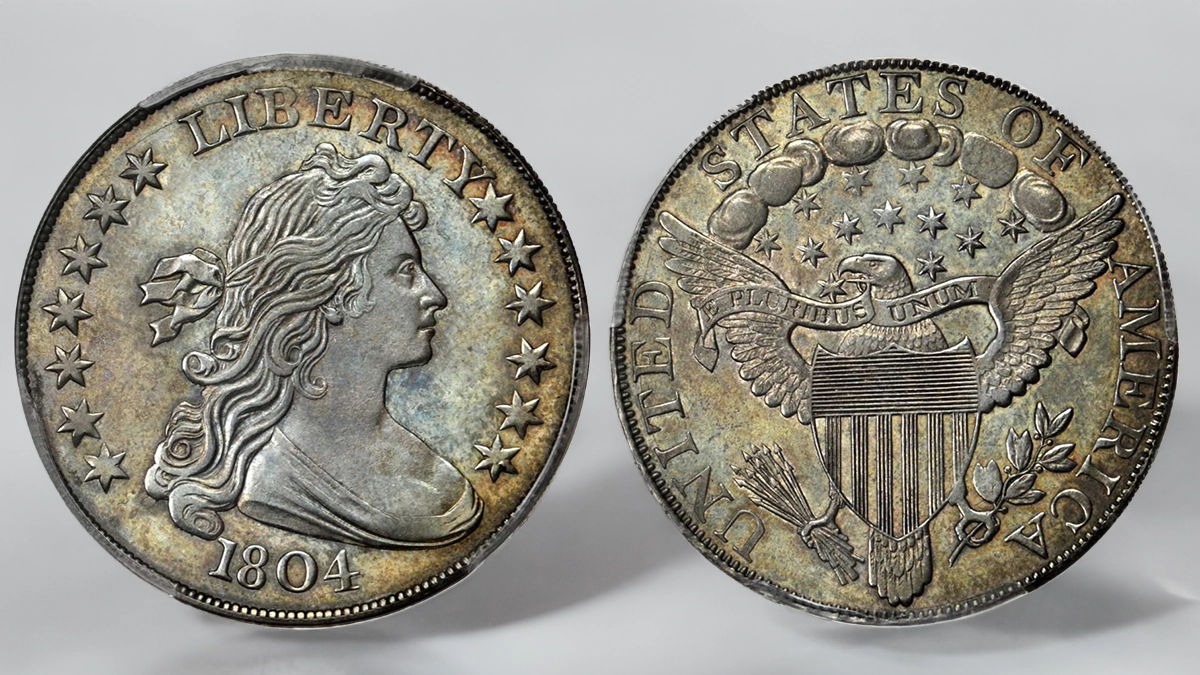
Despite its date, no silver dollars were struck in 1804; known examples were produced decades later at the United States Mint as diplomatic presentation pieces.
Featuring Liberty in a draped bust on the obverse and a heraldic eagle on the reverse, the coin reflects early 19th-century classical design ideals.
Only 16 specimens are known across three distinct classes. Its mystique, rarity, and storied provenance have made the 1804 Draped Bust Dollar a centerpiece of elite collections and auction history.
Why it tells America’s story
- Represents early American diplomacy
- Highlights the Mint’s evolving engraving techniques
- Demonstrates the nation’s desire for international legitimacy
Historical context
The U.S. used these specially struck dollars to impress foreign dignitaries, showcasing American craftsmanship.
Collector takeaway
The 1804 dollar tells the story of diplomacy, rarity, and global presentation.
7. 1854–1855 Gold Dollars and $3 Gold Pieces
Symbols of the Gold Rush and America’s westward expansion
The 1854–1855 Gold Dollars and $3 Gold Pieces reflect the United States Mint’s response to massive gold supplies from the California Gold Rush.
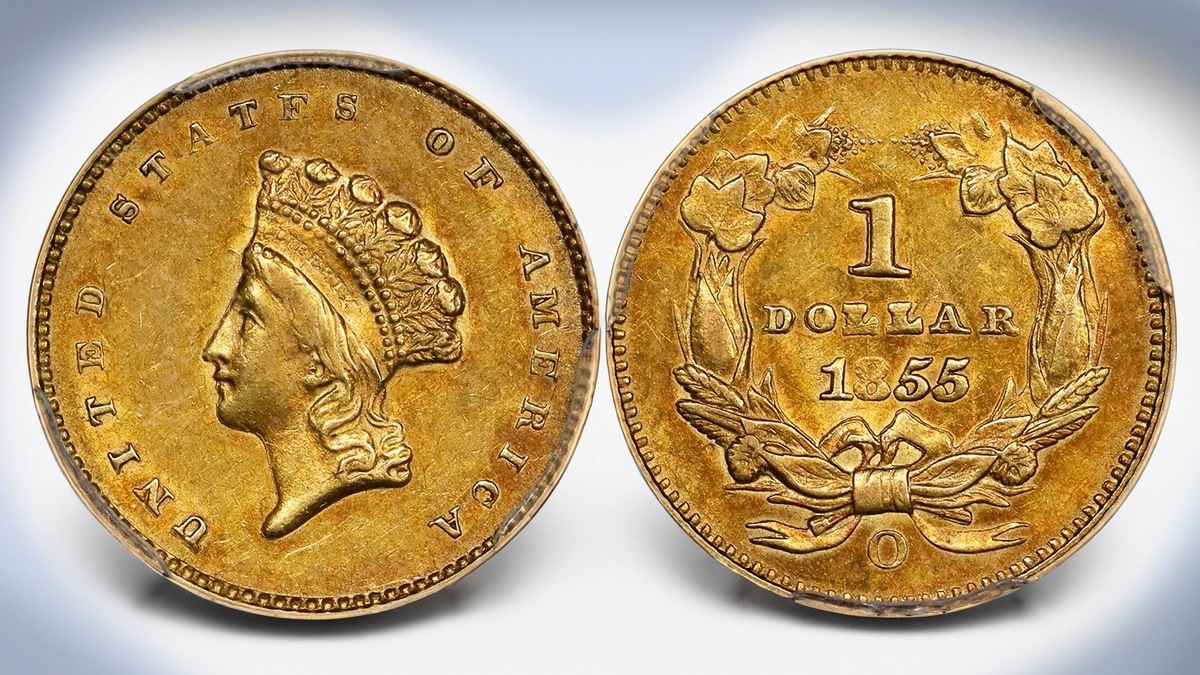
Rising bullion values made the tiny gold dollar impractical, prompting a reduction in weight and diameter beginning in 1854. At the same time, the unusual $3 gold piece was introduced to facilitate purchases of postage stamps and other small transactions.
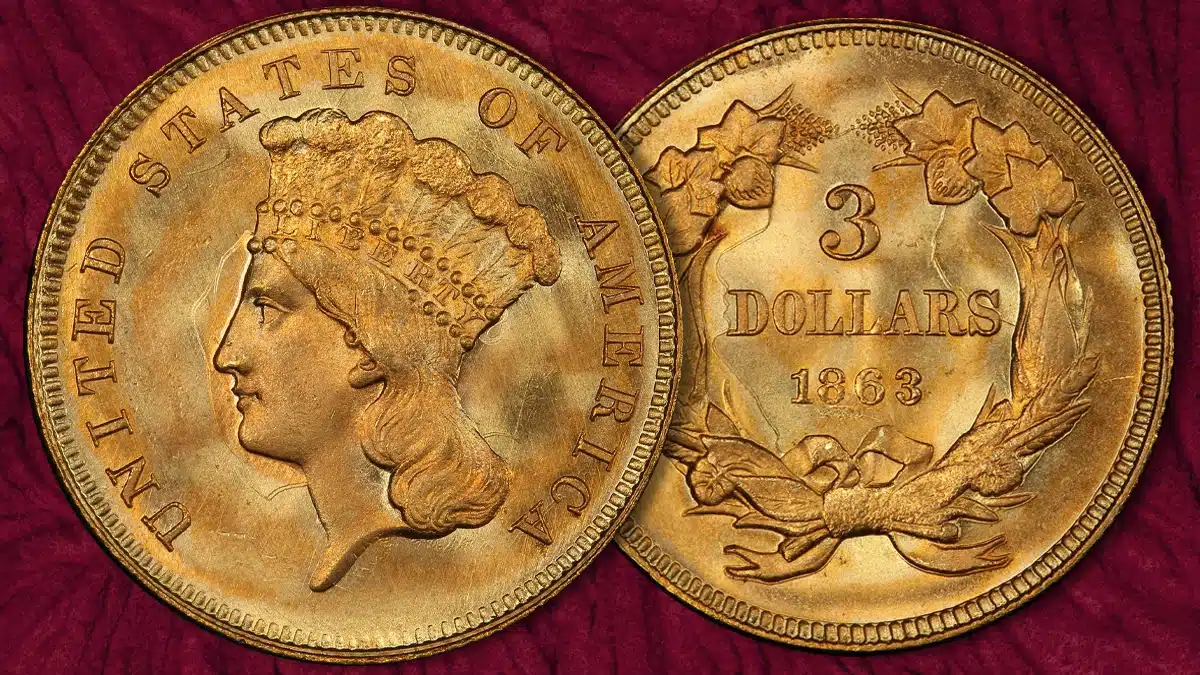
Both denominations feature James B. Longacre’s Liberty Head designs, with the $3 showcasing a distinctive agricultural wreath.
Collectively, these issues illustrate mid-19th-century monetary experimentation and remain popular with collectors for their history, aesthetics, and connection to America’s westward expansion.
Why they tell America’s story
- Directly tied to Gold Rush-era mining
- Reflect economic expansion westward
- Show how precious metal supplies shaped coinage
Historical context
These small gold coins circulated heavily in mining towns, where gold dust often served as currency.
Collector takeaway
They embody the rugged, adventurous spirit of mid-19th-century America.
6. 1916–1947 Walking Liberty Half Dollar
A masterpiece of American artistry during a transformative era
The 1916–1947 Walking Liberty Half Dollar is widely regarded as one of the most beautiful coins produced by the United States Mint.

Designed by sculptor Adolph A. Weinman, the obverse depicts Liberty striding toward the rising sun, draped in the American flag, symbolizing national optimism and progress.
The reverse features a powerful eagle perched on a mountain pine branch. Issued during a period encompassing two world wars and the Great Depression, the Walking Liberty Half Dollar reflects enduring American ideals.
Its artistry directly inspired the modern American Silver Eagle, cementing its lasting influence in U.S. coinage history.
Why it tells America’s story
- Symbolizes progress and freedom
- Produced during WWI, the Roaring Twenties, and WWII
- Represents the country’s aspiration and resilience
Historical context
As the United States modernized, Weinman’s Liberty led the nation forward—literally walking toward the dawn of a new era.
Collector takeaway
Its flowing lines reflect optimism during times of profound change.
5. 1907 Saint-Gaudens Double Eagle
America’s greatest artistic coin, and Roosevelt’s vision of a Renaissance
The 1907 Saint-Gaudens Double Eagle represents the pinnacle of American coin design. Conceived by sculptor Augustus Saint-Gaudens, the $20 gold piece features a bold, striding Liberty with torch and olive branch, while a soaring eagle dominates the reverse.

Commissioned by Theodore Roosevelt and struck by the United States Mint, the coin reflected a push to elevate U.S. coinage to classical artistic standards.
Early high-relief examples proved impractical for circulation, leading to modified versions later in 1907.
Revered for its artistry, symbolism, and technical challenges, the Saint-Gaudens Double Eagle remains a cornerstone of U.S. gold coinage and favored by collectors.
Why it tells America’s story
- Represents the American Renaissance in art
- Signifies national strength and ambition
- Embodies Roosevelt’s belief in elevating public design
Historical context
Mint engraving technology struggled to produce the high-relief version, showing tension between artistry and practicality.
Collector takeaway
The coin remains the pinnacle of U.S. design and a symbol of national artistic pride.
4. 1921 Peace Dollar
America’s symbol of hope following World War I
The 1921 Peace Dollar symbolizes the United States’s hope for lasting peace following World War I.

Designed by Italian-American sculptor Anthony de Francisci, the coin features a youthful Liberty wearing a radiant crown, inspired by classical imagery.
The reverse depicts a perched eagle clutching an olive branch, with the word “PEACE” prominently displayed.
The high-relief 1921 issue proved difficult to strike, resulting in limited production before a lower-relief format was adopted in 1922.
Revered for its artistry and symbolism, the 1921 Peace Dollar marks the final chapter of America’s great silver dollar tradition.
Why it tells America’s story
- Reflects postwar optimism
- Marks America’s emergence as a global leader
- Combines modernist art with traditional symbolism
Historical context
The coin’s release followed a grassroots movement calling for a “peace coin”—a direct reflection of public sentiment.
Collector takeaway
The Peace dollar captures a nation looking to rebuild and heal.
3. 1943 Steel Cent
A wartime coin that shows America’s industrial might
The 1943 Steel Cent stands as a striking wartime anomaly in U.S. coinage.
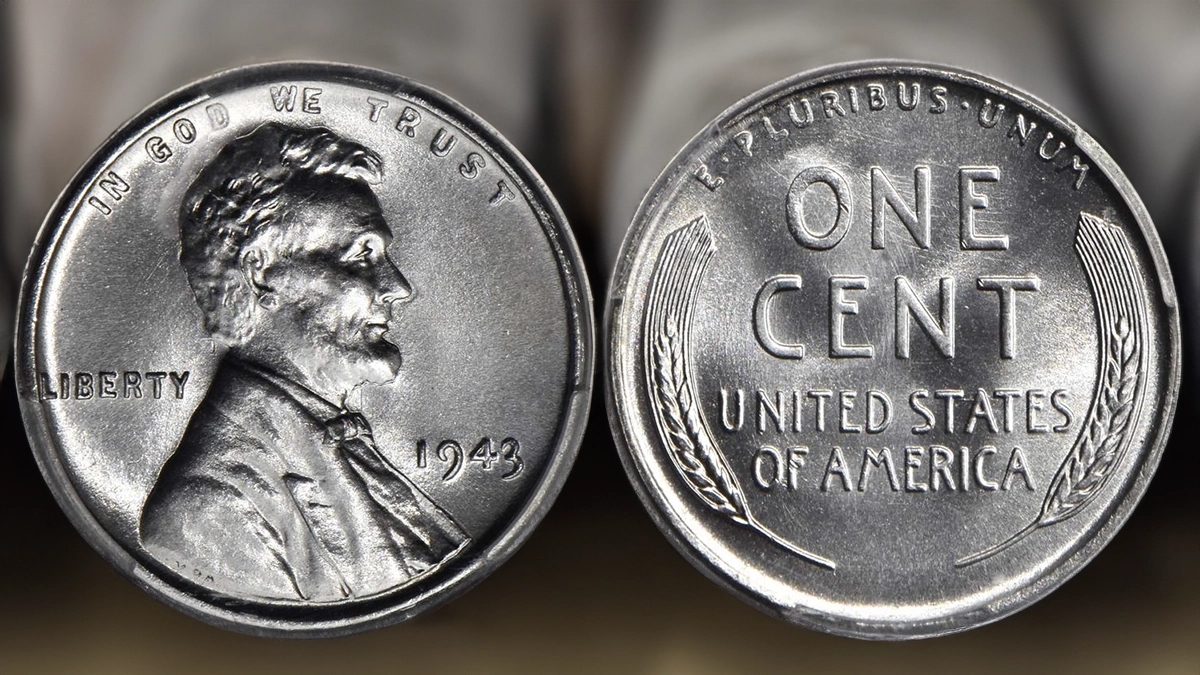
Produced by the United States Mint, the zinc-coated steel cent replaced copper to conserve critical metal supplies during World War II.
While visually distinctive, the change created problems in circulation, as the coins were often mistaken for dimes and prone to corrosion once the coating wore off. More than a billion were struck across three mints, making most examples affordable today.
However, off-metal errors in copper are legendary rarities. The 1943 Steel Cent remains a tangible reminder of America’s home-front sacrifices and wartime ingenuity.
Why it tells America’s story
- Represents wartime sacrifice
- Demonstrates industrial adaptability
- Symbolizes unity and resourcefulness
Historical context
Millions of Americans first encountered war-related change through their pocket change.
Collector takeaway
This small coin encapsulates the home-front experience of WWII.
2. 1964 Kennedy Half Dollar
A nation mourns its leader, and a coin becomes a memorial
The 1964 Kennedy Half Dollar was introduced in the wake of President John F. Kennedy’s assassination and quickly became a symbol of national mourning and remembrance.
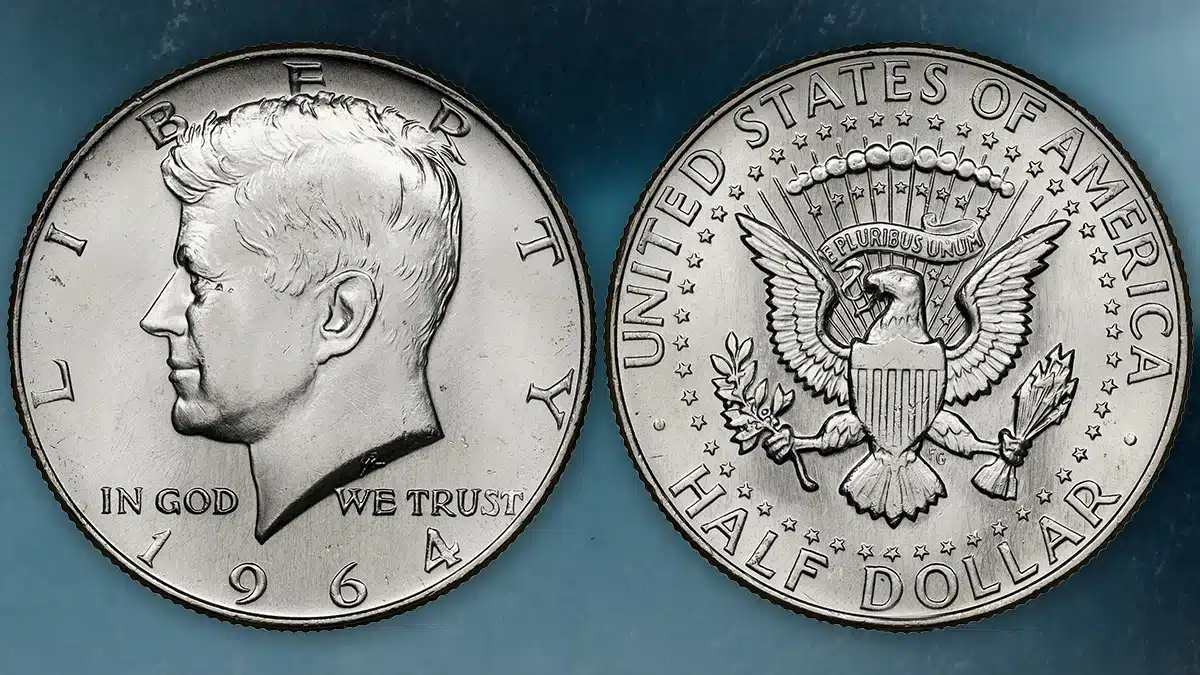
Struck by the United States Mint, the coin features a left-facing portrait of Kennedy designed by Gilroy Roberts, paired with Frank Gasparro’s presidential seal reverse.
Composed of 90% silver, the 1964 issue saw unprecedented public demand, leading to massive production and widespread hoarding.
As the first year of issue and the last 90% silver half dollar, the 1964 Kennedy Half Dollar holds enduring historical and emotional significance for collectors.
Why it tells America’s story
- Represents a nation in mourning
- Captures the spirit of 1960s America
- Shows how coins can serve as living memorials
Historical context
The coin became an instant keepsake, millions hoarded it as a tribute.
Collector takeaway
It remains an emotional piece of modern American history.
1. 50 State Quarters Program (1999–2008)
A modern coin series that reshaped American collecting
The 50 State Quarters Program (1999–2008) stands as one of the most successful initiatives in U.S. numismatic history.
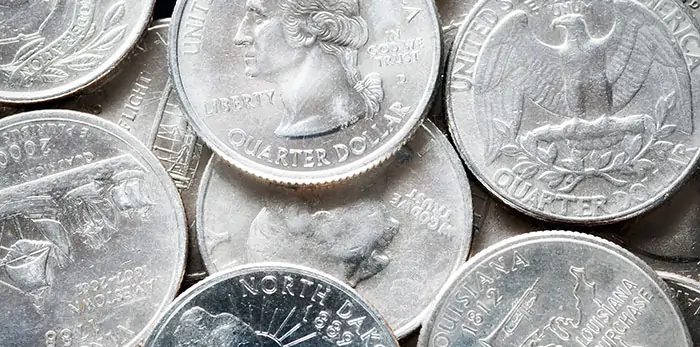
Launched by the United States Mint, the program honored each state in the order of its admission to the Union, releasing five new reverse designs annually.
Governors and state citizens played key roles in selecting themes that highlighted local history, landmarks, and cultural identity. The circulating series sparked unprecedented public interest, drawing millions of new collectors into the hobby and dramatically increasing seigniorage for the federal government.
More than 34 billion coins were struck during the program’s run. Beyond its economic impact, the series reshaped modern coin design and education, demonstrating how circulating coinage could celebrate heritage while engaging the public.
The program’s success paved the way for later series, including America the Beautiful Quarters.
Why it tells America’s story
- Highlights every state’s identity
- Encouraged national participation
- Strengthened interest in U.S. history
Historical context
For the first time, millions of families engaged with numismatics together, sparked by a federal coin program.
Collector takeaway
The State Quarters tell the story of modern America: diverse, unified, and deeply connected to its states’ heritage.
Honorable Mentions
These nearly made the list:
- Indian Head Cent, symbolizes westward expansion
- Buffalo Nickel, reflects early 20th-century cultural appreciation
- Susan B. Anthony Dollar, highlights women’s roles in American history
- 1992–1998 Silver Proof Sets, showcase modern craftsmanship
- Native American Dollar Series, celebrates underrecognized histories
All provide meaningful windows into America’s story.
Conclusion: Coins Are America’s Most Accessible Historical Documents
Each coin on this list captures a pivotal moment, cultural value, or national transformation. Together, they form a timeline of:
- Independence
- Expansion
- Conflict
- Innovation
- Unity
- Bommemoration
Collectors who study these coins gain more than rarity, they gain a deeper understanding of America itself.
The post Top 10 U.S. Coins That Tell the Story of America appeared first on CoinWeek: Rare Coin, Currency, and Bullion News for Collectors.
from CoinWeek: Rare Coin, Currency, and Bullion News for Collectors https://ift.tt/YFrLvCI


